2026-04-15
Forestry Mulching vs. Bulldozing: Why More Virginia Landowners Are Making the Switch
A side-by-side comparison of forestry mulching and bulldozer clearing for Virginia properties. Environmental impact, cost, timeline, and when each method makes sense.
If you've gotten quotes for land clearing in Virginia, you've probably been offered two very different approaches: a bulldozer or a forestry mulcher. They both clear land, but the similarities end there. Here's what actually matters when you're deciding between the two.
What happens to your land
This is the biggest difference and it's the one most people don't think about until it's too late.
Bulldozing scrapes everything off the surface. Trees, brush, topsoil, root systems - it all gets pushed into piles. Your land is left as exposed dirt. That exposed soil is immediately vulnerable to erosion, especially during Virginia's spring and summer storms. If your property has any slope at all, you could lose inches of topsoil before you ever get to use the cleared land.
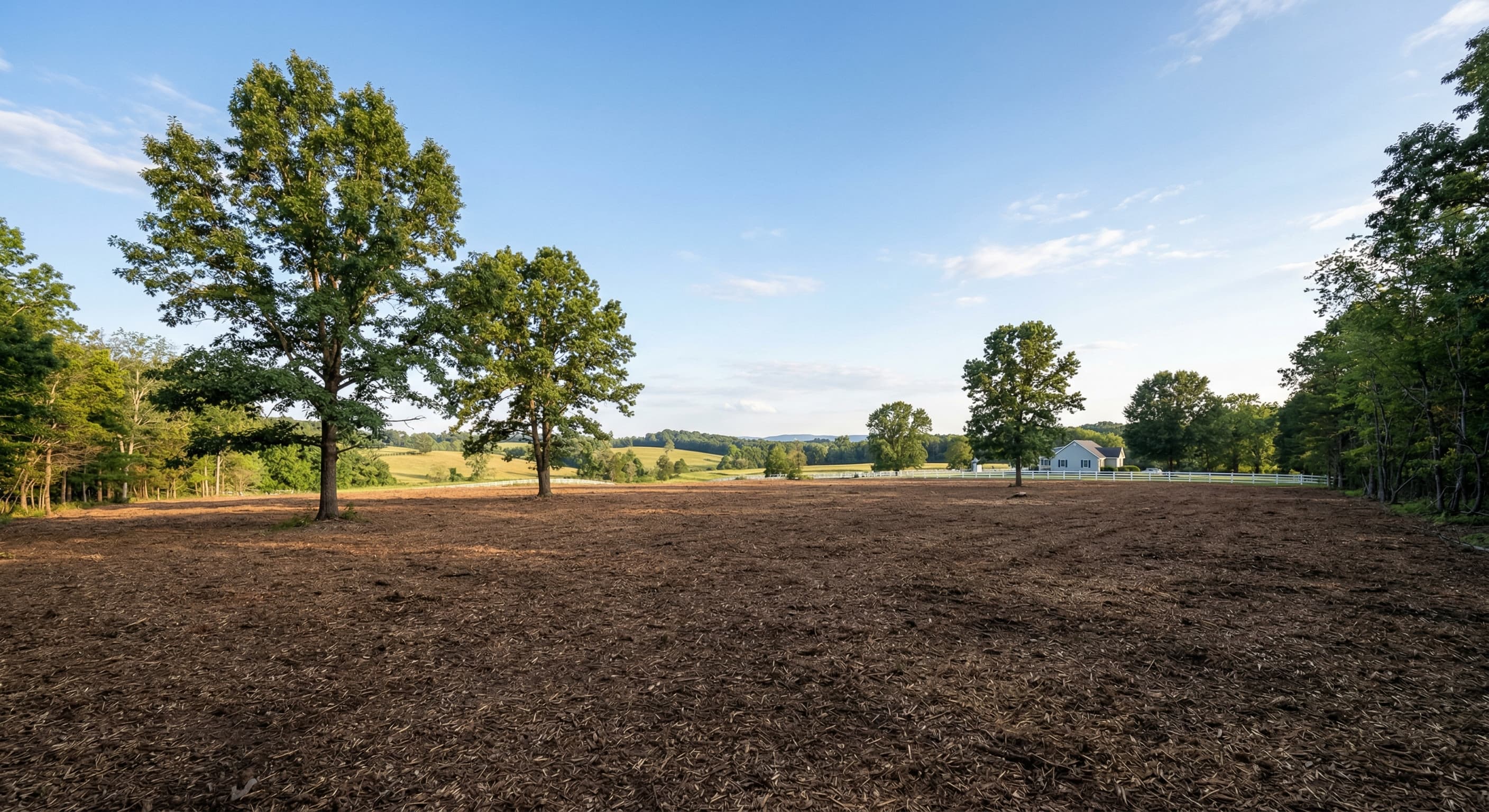
Forestry mulching grinds vegetation in place. Trees and brush are processed into mulch that stays on the ground, protecting the soil underneath. Root systems remain intact below the surface, holding the soil together. When the mulch decomposes over the next year, it feeds the soil and you're left with clean, stable, usable ground.
The permit question
In many Virginia counties, bulldozer clearing triggers erosion and sediment control requirements because you're disturbing the soil surface. That means permits, inspections, silt fencing, and potential fines if your runoff affects neighboring properties or waterways.
Forestry mulching typically doesn't trigger these requirements because the soil surface stays intact under the mulch layer. That saves you time, paperwork, and money before the job even starts.
Check with your county's building or environmental department, but in most Central Virginia localities, forestry mulching falls under a lighter regulatory burden than traditional dozer work.
Timeline differences
A bulldozer job has multiple phases: clearing, piling, hauling or burning, grading, and potentially re-seeding or stabilizing the exposed soil. A 2-acre lot might take a week from start to finish when you factor in hauling and cleanup.
A forestry mulcher handles the same 2 acres in one to two days. The machine processes everything on-site. When it drives off your property, the job is done. No piles to haul, no burn permits to wait on, no follow-up visits for cleanup.
When bulldozing still makes sense
Bulldozing isn't always the wrong choice. If you're clearing land for a foundation and you need the topsoil removed down to a specific grade, a dozer is the right tool. Large commercial development sites with engineered grading plans often require traditional earthmoving equipment.
But for residential lot clearing, brush removal, fence line cleanup, hunting land management, or reclaiming overgrown acreage, forestry mulching does the job faster, cleaner, and with less damage to your property.
The bottom line for Virginia properties
Virginia's clay-heavy soils are particularly vulnerable to erosion once exposed. The humid climate means rain is never far away. And the growing season is long enough that any bare soil will be colonized by invasive species within weeks if you don't act fast.
Forestry mulching sidesteps all of these problems. The ground stays covered, the soil stays stable, and you get usable land without the environmental cleanup headaches.
Get a free estimate
ClearCut Land provides professional forestry mulching and land clearing across Richmond and Central Virginia. Call (804) 374-9979 or request a free estimate to see what forestry mulching can do for your property.