Invasive Species Removal
Invasive Species Removal in Richmond, VA
Reclaim your property from aggressive invasive plants. We grind them down with forestry mulching and help you keep them from coming back.
Invasive species are one of the biggest threats to property owners in Central Virginia. Plants like honeysuckle, Bradford pear, tree of heaven, English ivy, kudzu, privet, and autumn olive spread fast, choke out native trees, and can turn a well-maintained property into an overgrown mess in just a couple of seasons. ClearCut Land RVA uses forestry mulching to remove invasive vegetation quickly and completely, grinding it into mulch on-site so there's nothing to haul or burn.
Common Invasive Species in Richmond
Central Virginia has a long list of invasive plants, but a handful of species cause the majority of problems for property owners. Japanese honeysuckle smothers everything in its path and can blanket entire tree canopies. Bradford pear (Callery pear) was planted for decades as an ornamental but spreads aggressively into fields and forest edges. Tree of heaven grows anywhere, reproduces through root suckers, and is nearly impossible to kill without targeted treatment. English ivy climbs mature trees, adds dangerous weight, and eventually kills them. Kudzu can grow a foot per day in summer and will cover structures if left unchecked. Chinese privet and autumn olive form dense thickets that crowd out native understory plants. All of these species thrive in Richmond's warm, humid climate and will continue spreading if they're not actively managed.
Why Invasive Species Are a Serious Problem
Invasive plants don't just look bad. They cause real, measurable damage to your property. They reduce property value by making land look neglected and inaccessible. They outcompete native plants that support local wildlife and pollinators. Species like tree of heaven and Bradford pear have weak wood that breaks easily in storms, creating hazards near homes, fences, and power lines. English ivy traps moisture against tree bark and building siding, accelerating rot. Dense invasive growth also creates habitat for ticks, snakes, and rodents close to your home. The longer you wait, the worse it gets. Invasive species don't plateau. They expand every season until something stops them.
How Forestry Mulching Removes Invasives
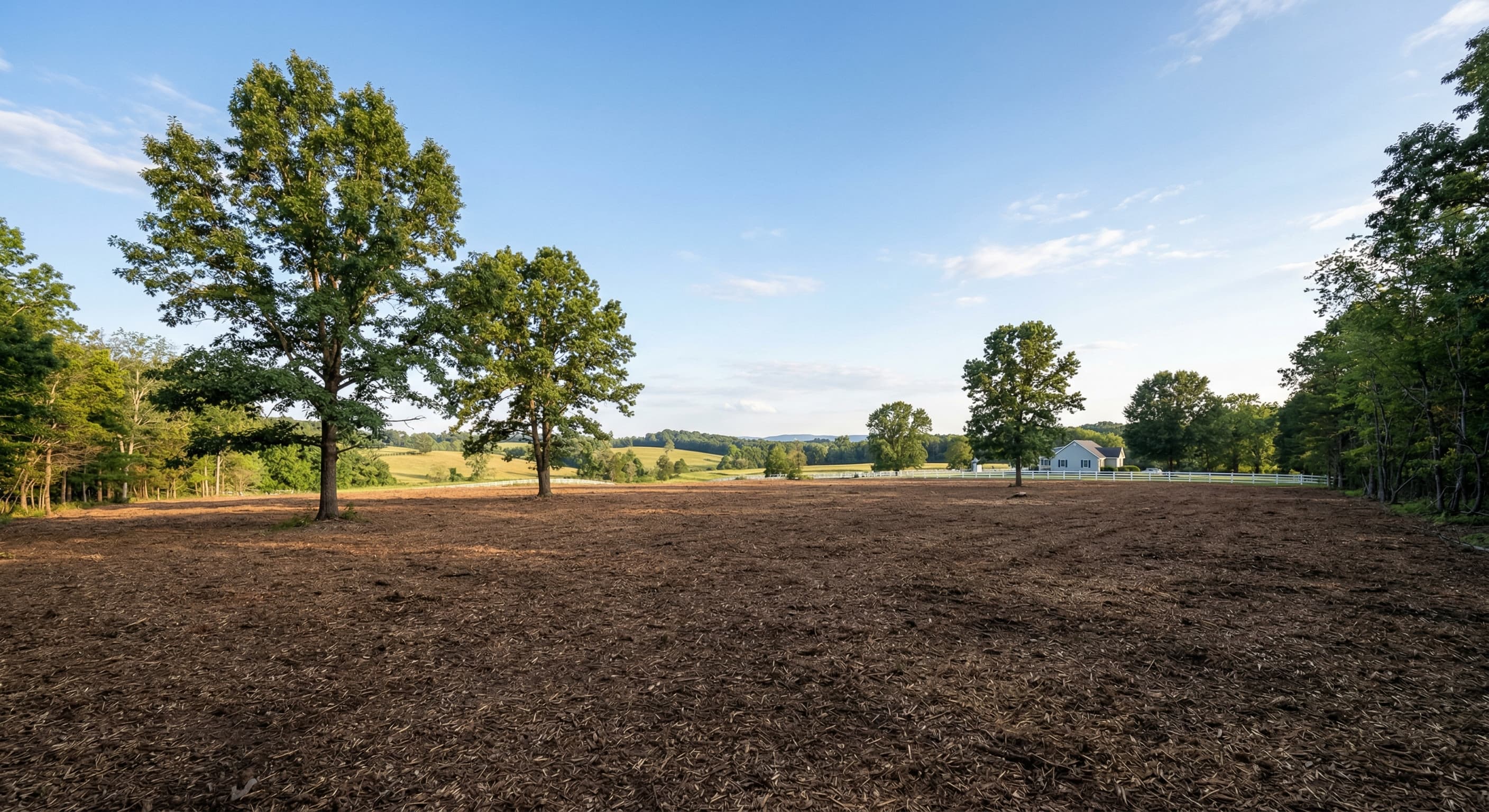
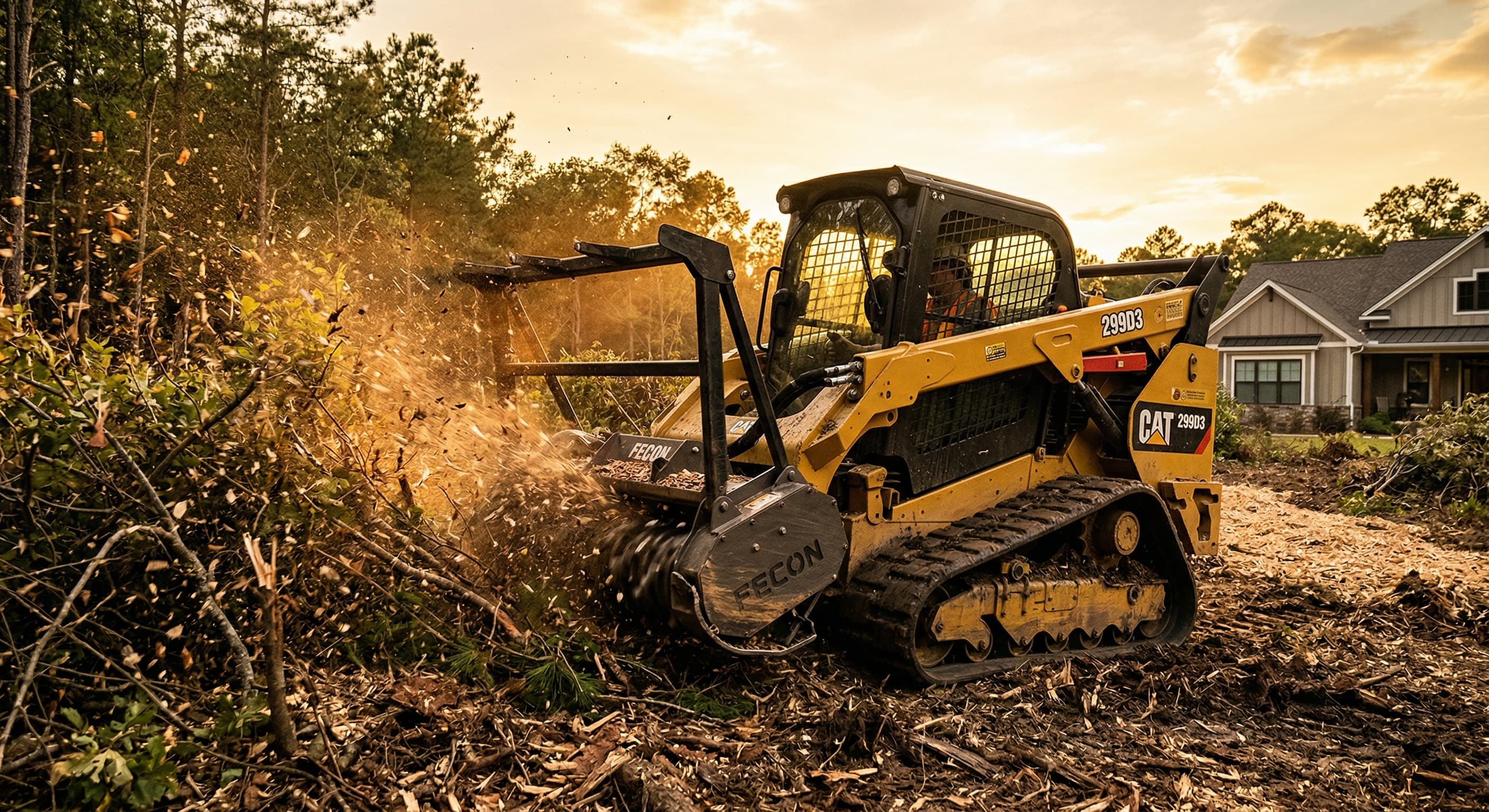
Forestry mulching is one of the most effective tools for large-scale invasive species removal. Our mulching head grinds standing vegetation directly into chips where it stands, turning dense thickets of honeysuckle, privet, or Bradford pear into a flat, walkable surface covered in natural mulch. This approach is faster and cheaper than hand-cutting or herbicide-only strategies for anything beyond a small garden bed. We can clear an acre of dense invasive growth in a single day. The mulch layer left behind also suppresses regrowth by blocking sunlight from reaching the soil, which gives you a head start on long-term control. For selective removal, we work around mature native trees and desirable vegetation, targeting only the invasive species you want gone.
Follow-Up Treatment for Long-Term Control
Forestry mulching handles the bulk removal, but some invasive species (especially tree of heaven, kudzu, and Japanese stiltgrass) can regrow from root systems even after the above-ground vegetation is destroyed. We recommend a follow-up treatment plan for persistent species. This typically involves targeted herbicide application to cut stumps or new sprouts 4 to 6 weeks after mulching, when regrowth is young and vulnerable. We can coordinate with licensed applicators in the Richmond area or advise you on a DIY approach. For many properties, a single mulching pass followed by one or two spot treatments is enough to break the cycle permanently. After that, routine monitoring once or twice a year keeps invasives from re-establishing.
Our Invasive Removal Process
1. Free property walk-through: We identify the invasive species on your land, assess the density, and flag any native trees or vegetation you want to keep. 2. Clear project quote: You get a fixed price based on the scope of work, not an hourly rate. 3. Mulching day: We bring in the equipment and grind the invasive vegetation down to ground level. Most residential properties are finished in one day. 4. Follow-up plan: We give you a written recommendation for any follow-up treatment needed based on the species we removed. 5. Final walk-through: Before we leave, we walk the cleared areas with you to confirm everything looks right.